
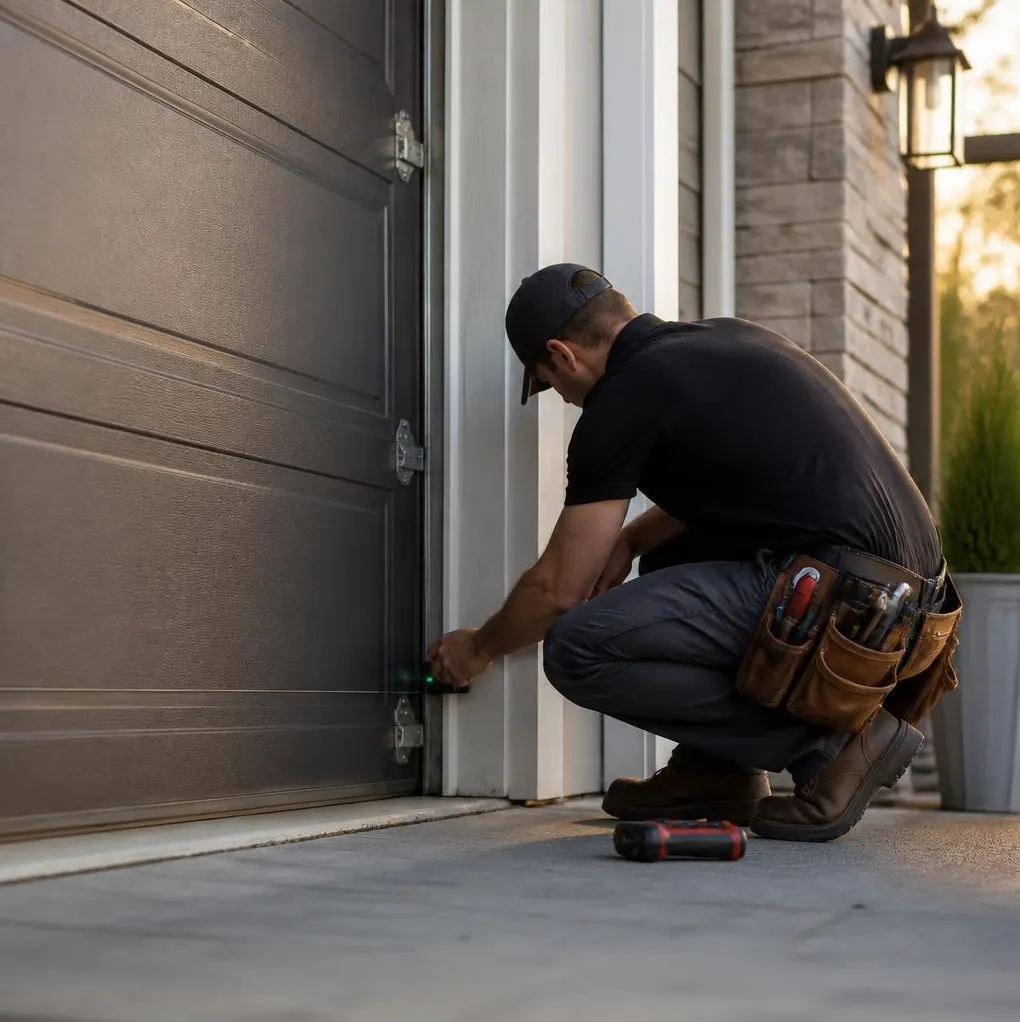
You pull into the driveway, hit the remote, and watch the door grind up — faded, a little crooked, with that one dented panel from the time someone misjudged the mirror. Your spouse says it's time for a new one. You say it still works fine. Neither of you has actually looked up whether replacing it does anything real for the house, so the argument just repeats itself every few months. Here's the straight version, without the sales pitch.
Why the Garage Door Carries More Visual Weight Than You Think
On most single-family homes, the garage door is one of the largest single surfaces on the front of the house — often larger than the front door, windows, or porch combined. That means it does a disproportionate amount of the work when someone forms a first impression, whether that's a neighbor, a delivery driver, or a buyer pulling up for a showing. A door that's chalky from sun exposure, dented, or visibly out of alignment reads as "this house hasn't been maintained," even if everything else is in good shape. A clean, properly sized door in a color that fits the house does the opposite — it signals the rest of the property is cared for before anyone steps inside.
This is why garage doors show up so often in home-value studies as one of the higher-return exterior projects. National remodeling cost-versus-value reports have repeatedly put garage door replacement among the top recoverable projects, often recovering a large majority of its cost at resale — sometimes close to the full amount, depending on the market and the door chosen. That's a general trend across many markets, not a guaranteed number for any specific house, but it's consistent enough to take seriously.
What Actually Moves the Needle on Resale
Not every garage door upgrade pays off the same way. A few things matter more than others:
- Proportion and style match. A door that fits the architecture of the house — matching trim color, panel style, window pattern — reads as intentional. A mismatched door, even a brand-new one, can look like an afterthought.
- Condition over age. A ten-year-old door that's been maintained, repainted, and runs quietly often looks better to a buyer than a five-year-old door with sun-bleached panels and a sagging bottom seal.
- Function, not just looks. Buyers and inspectors both notice a door that doesn't reverse properly, slams, or sticks halfway. That gets flagged in a home inspection report, which can cost you more in negotiation than the repair itself would have.
- Insulation, if the garage is used as more than storage. If the garage doubles as a workshop, gym, or is attached with living space above it, an insulated door matters more to a buyer evaluating comfort and utility bills.
Why Doors Age Faster Out Here
Weather does real work on a garage door in this part of California, and it's worth factoring into the repair-versus-replace decision. Intense sun through the dry months fades paint and finish unevenly, especially on south- and west-facing doors, which is usually what creates that chalky, uneven look rather than any structural problem. Dust and wildfire smoke during fire season settle into tracks and rollers, which speeds up wear on hardware even when the door panels themselves are fine. Winter rain can find its way into bottom seals and cause swelling or rust on steel doors that haven't been resealed in a while. None of this means you need a new door — it means the hardware and finish often wear out well before the actual door structure does, which changes what "fixing it" should mean.
When Repair Is the Honest Answer
If the panels are structurally sound and the problems are cosmetic fading, a worn weather seal, noisy rollers, or an opener that's starting to struggle, replacement is usually overkill. A repaint, new seals, fresh rollers, and a properly adjusted opener can solve the "it looks bad and sounds bad" problem for a fraction of the cost of a new door, and it buys years of life.
When Replacement Actually Makes Sense
Replacement earns its cost when the door is visibly out of proportion with a renovated house, when panels are dented or warped beyond cosmetic fixing, when the door is a style that's clearly dated next to updated siding or trim, or when older homes are going through broader retrofit work and the garage door opening is part of that structural upgrade. In those cases, you're not just buying appearance — you're fixing a real mismatch between the door and the rest of the house.
Setting Realistic Expectations
A new garage door will not single-handedly sell a house or make up for deferred maintenance elsewhere. What it does reliably is remove a negative — that moment where a buyer's first look at the house includes a visible flaw — and replace it with a neutral-to-positive impression. That's worth something real, but it's not magic, and it's not a reason to replace a door that just needs cleaning, a repaint, and new rollers.
When to Call Palmdale Garage Door
If you're genuinely unsure whether your door needs a repair or a full replacement, that's exactly the kind of call worth making before you spend money either way. Palmdale Garage Door can walk through an honest assessment — checking the panels, track alignment, springs, and opener — and tell you plainly whether a repair will get you another several years or whether the door's condition and style are working against the house. If it's a repair, that might mean spring replacement, new rollers and seals, or an opener tune-up. If it's clearly time for a new door, they'll handle the full installation, sized and styled to fit the house rather than just the opening.
If your garage door has become the thing you argue about every time you pull into the driveway, settle it with a real inspection instead of another guess. Call Palmdale Garage Door and get a straight answer for your home in Palmdale, CA.